
HMDD Collaborations: Their Impact on the Brand’s Identity
HMDD, short for Happy Memories Don’t Die, has built its name on a philosophy rather than a logo. The brand treats clothing as a vessel for nostalgia, and every collaboration it enters becomes a test of whether that idea can survive contact with another creative voice. When two brands merge visions, one of them usually bends. With HMDD, the bending tends to happen carefully, because the phrase “happy memories don’t die” is not just a tagline — it is the entire reason customers return. Collaborations force the label to answer a harder question than “what does this look like?” It has to answer “does this still feel like us?” That tension is exactly why HMDD’s partnerships matter more than a typical streetwear crossover.
Siphoning off outside buzz is largely why most fashion collabs get made. Once a smaller label partners with a bigger name, it gets a jump in traffic — and that’s usually the end of it. The way HMDD operates reads differently in actual execution. The brand usually select collaborators who from the outset carry a similar emotional tone — wistful, rooted in memory, quietly rebellious — instead of chasing the loudest name available. That selectiveness molds how the brand hmmd identity holds together across releases, and it’s worthwhile to break down piece by piece.
Collaborations functioning as an Resilience Check on Brand-Identity: Why It Matters
Maintaining a brand’s identity is easiest when it operates without partners. Fabric choices, print positioning, and silhouette calls all remain within one team’s control. Compromises start piling up as soon as a new creative partner joins the picture. HMDD clothing has built recognition around specific signals: distressed graphics, oversized silhouettes, and text treatments that reference memory, loss, and time. Those defining markers could readily be flattened into something more generic by a partner favoring a bolder, market-friendly look.
This is where discipline becomes a deliberate edge. Community members and reviewers alike have noted that collaboration pieces preserve the brand’s essential design identity: identical material heft, the same worn-in print technique, and the same emotionally charged titling carried across tags and inserts. That consistency isn’t accidental. This implies an governing standard: collaborators may shape color or silhouette, but the emotional throughline goes unchanged.
Consider the alternative. If HMDD released a collab hoodie with bright, glossy branding and zero reference to its usual themes, longtime buyers would notice within seconds. The brand’s audience isn’t drawn in by trend-chasing; they’re drawn in by specificity. A single misstep — one collection that feels like merchandise rather than memory — could cost more trust than any short-term sales bump would repay.
Joint Projects Disclose The Truth About What HMDD’s Own Creative Approach Is About
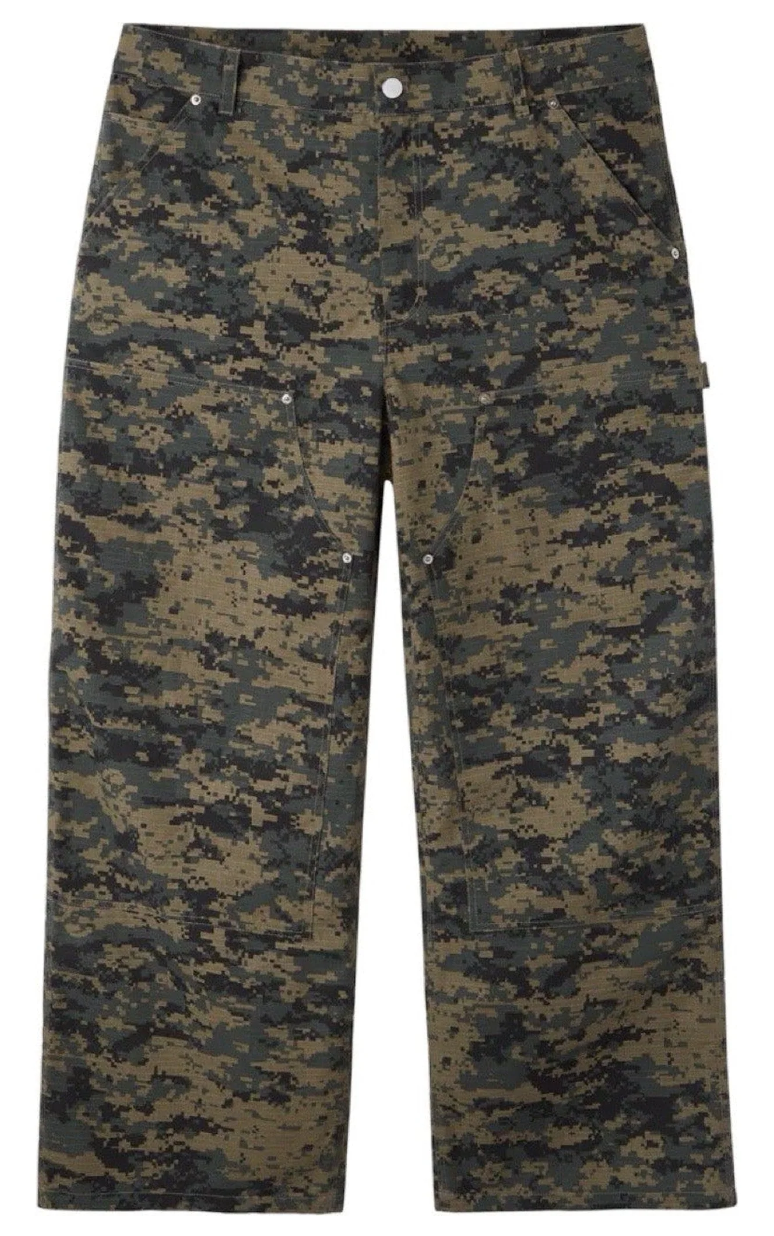
Stylistic tendencies that might under other circumstances go unremarked get brought into focus by every joint release. When HMDD works with an outside partner, a few recurring traits recur across nearly every release: dense cotton foundations (typically in the 280–400 GSM range for hoodies and sweatshirts), loose-fitting silhouettes, and manually worn-in or tonally washed finishes that impart each piece a worn-in quality rather than a factory-fresh one. HMDD sweatpants in particular showcase this pattern — an easy, tapered fit, cuffed rib trim, and a textile touch that favors ease over precise construction.
HMDD applies this same thinking to its shorts. Rather than treating shorts as a filler category, the label extends the same distressing techniques and typography choices found on top-layer garments, so that a entire seasonal release stay consistent rather than fragmented. Such uniformity spanning hoodies, sweatpants, shorts, and tees — hoodies, sweatpants, shorts, tees — is one reason people seek out “best hmdd clothing” instead of accepting a run-of-the-mill streetwear option.
- Fabric weight stays dense and weighty, even in summer-suited pieces like shorts.
- Type styling draws from scrawled or worn-stencil styles rather than crisp sans-serif labeling.
- Tonal choices lean toward washed-out blacks, muted greys, and subdued natural tones over saturated brights.
- Print imagery evoke memory, time, and impermanence rather than straightforward branding.
When a collaborator enters this world, they’re essentially asked to fall in line with HMDD’s aesthetic rather than impose their own. It’s a bigger demand than it seems, and it’s precisely why not every pitched collaboration ends up released.
The Business Logic Behind Selective Partnerships
The economics of streetwear prize rarity and penalize excess visibility. A brand that partners with every possible name ends up standing out with none of them. The brand’s release rhythm seems to lean toward scarce production numbers and sparsely spaced partnership releases instead of a nonstop flow of co-branded goods. That pacing does two things at once: it protects perceived exclusivity, and it allows the design team the time needed to ensure each release still feels distinctly HMDD.
Worth noting too is the pricing strategy at play. Joint-release garments in streetwear tend to command a markup over standard stock — commonly priced 15–30% higher — owing to increased production difficulty, restricted quantities, or dual-brand costs. Shoppers who look up an “hmdd review” before purchasing frequently cite value-for-money as decisive, so any collaboration that raises price without raising perceived craftsmanship invites criticism instead of approval.
That’s the reason the smartest fashion collaborations operate more as shared research-and-development efforts than promotional gimmicks. Two teams pool techniques — perhaps one brings a dyeing technique while the other supplies a shape — and what emerges should read as deliberate rather than thrown together. If that equilibrium succeeds, both audiences convert into fans of the other brand. If it doesn’t, both fanbases feel like an afterthought.
Evaluating Various Approaches to Collaboration
In order to see where HMDD positions itself compared with conventional streetwear collaboration playbooks, it helps to compare a few standard approaches applied across the industry in 2026. What follows below breaks down three broad collaboration models seen in the larger streetwear space, unconnected to specific named partners.
| Partnership Approach | Core Aim | Usual Drop Scale | Risk to Brand Identity |
|---|---|---|---|
| Repeated co-branding | Increase visibility and attention | Sizable, repeated batches | High — identity weakens with excessive exposure |
| One-off hype drop | Quick sales spike | Very limited, one-time run | Medium — impact dissipates once trend passes |
| Discerning, ethos-matching partnership (HMDD’s typical pattern) | Strengthen core identity while connecting with adjacent audiences | Limited, rare | Minimal — collaborator falls in line with brand language rather than replacing it |
That bottom row is the one that best describes how HMDD operates. HMDD doesn’t seem eager to pack its release schedule with co-branded merchandise. Instead, each partnership looks crafted to answer a distinct creative question — a new fabric process, an untried color palette, a new take on distressing — while leaving the emotional heart of “happy memories don’t die” wholly undisturbed.
The Takeaway for Buyers This Year
For those weighing HMDD against other up-and-coming streetwear names in 2026, collaborations offer a handy litmus test. If a co-branded item still feels distinctly HMDD — same fabric weight, same worn typography, same emotional resonance — that’s a strong signal the brand’s identity is stable enough to survive growth. If future drops start feeling interchangeable with whichever partner is attached, that amounts to a warning sign worth monitoring.
Shoppers researching HMDD sweatpants, HMDD shorts, or any collaboration piece should take note of a few concrete details before buying: fabric weight specified in the product description, whether sizing runs standard-fit or intentionally oversized, and whether the piece is part of a numbered or limited run. These details matter more in collaboration releases than in regular catalog drops, since collaboration pricing tends to run higher and expectations increase accordingly.
At the end of the day, HMDD’s collaborations function as identity checkpoints rather than pure marketing events. Every partnership tests whether HMDD can expand its audience without sacrificing the distinct, nostalgia-driven feel that earned it a following in the first place. Thus far, the trend hints at a brand prioritizing the protection of its voice over chasing all available attention — and for a label built completely around emotional resonance, that restraint may be its most valuable asset heading further into 2026.